Cargo Cult Design: Why Your Startup Isn’t Apple (And Why That’s a Good Thing)
Cargo Cult Design: Why Your Startup Isn’t Apple (And Why That’s a Good Thing)
Cargo Cult Design: Why Your Startup Isn’t Apple (And Why That’s a Good Thing)
We are mimicking the visual rituals of success without understanding the functional context that made those rituals work. If your design decisions cannot be defended with user understanding, task completion, or revenue impact, they are decorations.
Insights
Jan 10, 2026
Walk into any co-working space, open a laptop, and head to a random SaaS landing page. You know exactly what to expect. A sleek Bento grid, a generous serving of San Francisco or Inter typeface, soft gradients, perfectly rounded corners, and enough white space to host a small gala.
The “SaaS Starter Pack”, deployed with the same Figma components, praised with the same hollow compliments: “Clean.” “Modern.” “Apple vibes.”
Every new product looks the same, and it’s not because we’ve all reached a collective design enlightenment. It’s because the tech industry is currently obsessed with “Cargo Cult” design
They copy the visual language of successful companies without understanding the conditions that made those designs work in the first place. The result is a sea of beautiful interfaces that explain nothing, convert poorly, and leave users confused but impressed enough to hit “like” on Dribbble.
Let’s talk about why this happens, why it fails, and why abandoning it is your unfair advantage
The Wooden Planes of Product Design
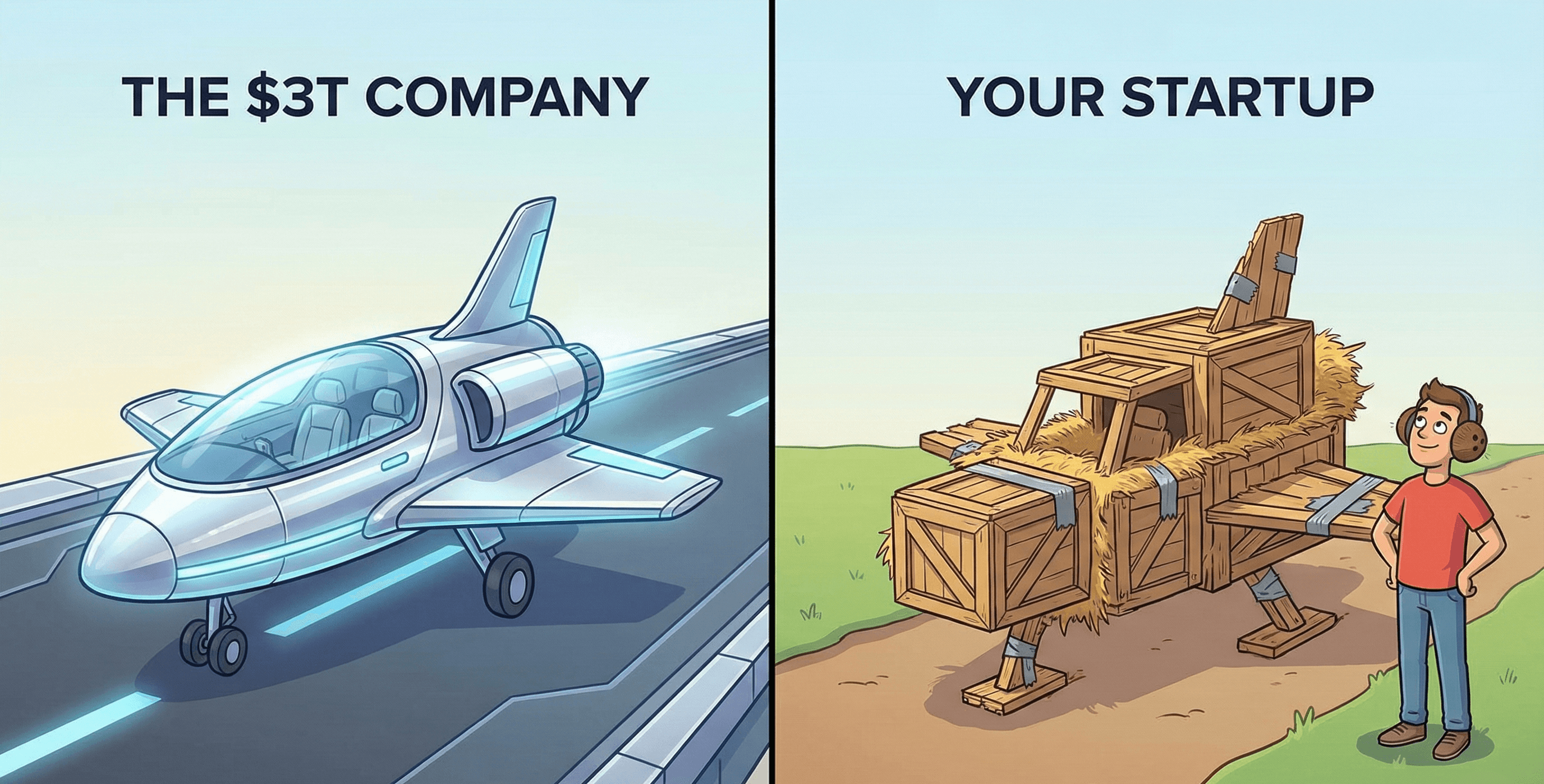
The term “Cargo Cult” originated in the Pacific islands after World War II. During the war, indigenous people watched as Allied forces built airstrips and performed rituals — wearing headsets, waving signal flags — and “cargo” (food and supplies) would magically fall from the sky. When the war ended and the cargo stopped, some islanders began building their own airstrips out of straw and planes out of wood. They wore “headsets” made of coconuts and performed the rituals, hoping the cargo would return.
They had the form perfectly right, but they lacked the underlying infrastructure.
In 2026, we are doing the same thing with our UIs. Replace wooden airplanes with landing pages. Replace cargo with revenue.
We see Apple, Airbnb, and Stripe using ultra-minimalist layouts and think, “If our dashboard looks like that, we’ll be worth billions, too.” We copy the “airstrip” and wonder why the users aren’t landing. We forget that those companies didn’t start with minimalism; they earned it!
Minimalism is an Expensive Luxury
The biggest mistake a seed-stage startup can make is trying to design like Apple. Why? Because Apple can afford to be minimalist.
Apple has spent billions of dollars and decades training the global population to understand its design language. Apple can afford a homepage that says almost nothing because 100 percent of its users already know what an iPhone is. Minimalism works when user literacy is already maxed out.
If you are a niche B2B startup for logistics management or a new fintech app for cross-border payments, you do not have that luxury. Your users do not wake up thinking about you. They do not understand your terminology. In your world, minimalism is often just another word for obfuscation.
Obvious beats beautiful when literacy is low. And if your user doesn’t know how to use your tool in the first thirty seconds, they aren’t going to stick around to appreciate your use of negative space.
The Portfolio Trap
Here is where designers need to hear something uncomfortable.
A lot of modern product design is optimized for applause, not outcomes.
Designers chase Dribbble likes, Behance features, and Twitter praise from other designers. They want to show they can follow the latest trends — the glassmorphism, the neo-brutalism, the Linear-style dark mode. Visual novelty travels faster than business results. A clean mockup gets engagement. A conversion rate improvement does not go viral.
So products get designed to look finished instead of work being finished.
This is how you end up with interfaces that are gorgeous, award-winning, and commercially irrelevant.
If your design decisions cannot be defended with user understanding, task completion, or revenue impact, they are decorations.
Context First Design
Context-First Design means recognizing that your aesthetic should be a byproduct of your solution, not the starting point. If your product is a complex tool for experts, it should look like a cockpit, not a meditation app.
Here is a simple framework for Context First Design.
1. Measure User Literacy Before Designing
Ask one question. How well does the user understand this problem and this category today? If the answer is “barely,” your design needs to teach before it impresses.
2. Optimize for Comprehension
Clear beats clever. Explicit beats elegant. If a button needs a label instead of an icon, use the label. If a section needs explanation, write the copy.
3. Earn Minimalism Later
Start verbose. Earn brevity through iteration. Reduce only what users no longer need. Minimalism should be the end state, not the starting pose.
4. Borrow Mental Models, Not Visual Styles
Apple’s real advantage is not rounded corners. It is consistency, predictability, and ruthless focus on user mental models. Copy that, not the gradient.
5. Judge Design by Behavior, Not Praise
Did users finish the task? Did they understand the value? Did they convert, retain, or return? That is the scorecard.
Your challenge is simple and uncomfortable. Audit your product today. Identify one place where you chose aesthetic fashion over user clarity. Rewrite it. Redesign it. Make it obvious, even if it hurts your inner designer.
The goal of design isn’t to look like a billion-dollar company; it’s to provide the value that makes you a billion-dollar company. Stop building wooden airplanes and start building things that actually fly.
More to Discover
Cargo Cult Design: Why Your Startup Isn’t Apple (And Why That’s a Good Thing)
Cargo Cult Design: Why Your Startup Isn’t Apple (And Why That’s a Good Thing)
Cargo Cult Design: Why Your Startup Isn’t Apple (And Why That’s a Good Thing)
We are mimicking the visual rituals of success without understanding the functional context that made those rituals work. If your design decisions cannot be defended with user understanding, task completion, or revenue impact, they are decorations.
Insights
Jan 10, 2026
Walk into any co-working space, open a laptop, and head to a random SaaS landing page. You know exactly what to expect. A sleek Bento grid, a generous serving of San Francisco or Inter typeface, soft gradients, perfectly rounded corners, and enough white space to host a small gala.
The “SaaS Starter Pack”, deployed with the same Figma components, praised with the same hollow compliments: “Clean.” “Modern.” “Apple vibes.”
Every new product looks the same, and it’s not because we’ve all reached a collective design enlightenment. It’s because the tech industry is currently obsessed with “Cargo Cult” design
They copy the visual language of successful companies without understanding the conditions that made those designs work in the first place. The result is a sea of beautiful interfaces that explain nothing, convert poorly, and leave users confused but impressed enough to hit “like” on Dribbble.
Let’s talk about why this happens, why it fails, and why abandoning it is your unfair advantage
The Wooden Planes of Product Design
The term “Cargo Cult” originated in the Pacific islands after World War II. During the war, indigenous people watched as Allied forces built airstrips and performed rituals — wearing headsets, waving signal flags — and “cargo” (food and supplies) would magically fall from the sky. When the war ended and the cargo stopped, some islanders began building their own airstrips out of straw and planes out of wood. They wore “headsets” made of coconuts and performed the rituals, hoping the cargo would return.
They had the form perfectly right, but they lacked the underlying infrastructure.
In 2026, we are doing the same thing with our UIs. Replace wooden airplanes with landing pages. Replace cargo with revenue.
We see Apple, Airbnb, and Stripe using ultra-minimalist layouts and think, “If our dashboard looks like that, we’ll be worth billions, too.” We copy the “airstrip” and wonder why the users aren’t landing. We forget that those companies didn’t start with minimalism; they earned it!
Minimalism is an Expensive Luxury
The biggest mistake a seed-stage startup can make is trying to design like Apple. Why? Because Apple can afford to be minimalist.
Apple has spent billions of dollars and decades training the global population to understand its design language. Apple can afford a homepage that says almost nothing because 100 percent of its users already know what an iPhone is. Minimalism works when user literacy is already maxed out.
If you are a niche B2B startup for logistics management or a new fintech app for cross-border payments, you do not have that luxury. Your users do not wake up thinking about you. They do not understand your terminology. In your world, minimalism is often just another word for obfuscation.
Obvious beats beautiful when literacy is low. And if your user doesn’t know how to use your tool in the first thirty seconds, they aren’t going to stick around to appreciate your use of negative space.
The Portfolio Trap
Here is where designers need to hear something uncomfortable.
A lot of modern product design is optimized for applause, not outcomes.
Designers chase Dribbble likes, Behance features, and Twitter praise from other designers. They want to show they can follow the latest trends — the glassmorphism, the neo-brutalism, the Linear-style dark mode. Visual novelty travels faster than business results. A clean mockup gets engagement. A conversion rate improvement does not go viral.
So products get designed to look finished instead of work being finished.
This is how you end up with interfaces that are gorgeous, award-winning, and commercially irrelevant.
If your design decisions cannot be defended with user understanding, task completion, or revenue impact, they are decorations.
Context First Design
Context-First Design means recognizing that your aesthetic should be a byproduct of your solution, not the starting point. If your product is a complex tool for experts, it should look like a cockpit, not a meditation app.
Here is a simple framework for Context First Design.
1. Measure User Literacy Before Designing
Ask one question. How well does the user understand this problem and this category today? If the answer is “barely,” your design needs to teach before it impresses.
2. Optimize for Comprehension
Clear beats clever. Explicit beats elegant. If a button needs a label instead of an icon, use the label. If a section needs explanation, write the copy.
3. Earn Minimalism Later
Start verbose. Earn brevity through iteration. Reduce only what users no longer need. Minimalism should be the end state, not the starting pose.
4. Borrow Mental Models, Not Visual Styles
Apple’s real advantage is not rounded corners. It is consistency, predictability, and ruthless focus on user mental models. Copy that, not the gradient.
5. Judge Design by Behavior, Not Praise
Did users finish the task? Did they understand the value? Did they convert, retain, or return? That is the scorecard.
Your challenge is simple and uncomfortable. Audit your product today. Identify one place where you chose aesthetic fashion over user clarity. Rewrite it. Redesign it. Make it obvious, even if it hurts your inner designer.
The goal of design isn’t to look like a billion-dollar company; it’s to provide the value that makes you a billion-dollar company. Stop building wooden airplanes and start building things that actually fly.
More to Discover
Cargo Cult Design: Why Your Startup Isn’t Apple (And Why That’s a Good Thing)
Cargo Cult Design: Why Your Startup Isn’t Apple (And Why That’s a Good Thing)
Cargo Cult Design: Why Your Startup Isn’t Apple (And Why That’s a Good Thing)
We are mimicking the visual rituals of success without understanding the functional context that made those rituals work. If your design decisions cannot be defended with user understanding, task completion, or revenue impact, they are decorations.
Insights
Jan 10, 2026
Walk into any co-working space, open a laptop, and head to a random SaaS landing page. You know exactly what to expect. A sleek Bento grid, a generous serving of San Francisco or Inter typeface, soft gradients, perfectly rounded corners, and enough white space to host a small gala.
The “SaaS Starter Pack”, deployed with the same Figma components, praised with the same hollow compliments: “Clean.” “Modern.” “Apple vibes.”
Every new product looks the same, and it’s not because we’ve all reached a collective design enlightenment. It’s because the tech industry is currently obsessed with “Cargo Cult” design
They copy the visual language of successful companies without understanding the conditions that made those designs work in the first place. The result is a sea of beautiful interfaces that explain nothing, convert poorly, and leave users confused but impressed enough to hit “like” on Dribbble.
Let’s talk about why this happens, why it fails, and why abandoning it is your unfair advantage
The Wooden Planes of Product Design
The term “Cargo Cult” originated in the Pacific islands after World War II. During the war, indigenous people watched as Allied forces built airstrips and performed rituals — wearing headsets, waving signal flags — and “cargo” (food and supplies) would magically fall from the sky. When the war ended and the cargo stopped, some islanders began building their own airstrips out of straw and planes out of wood. They wore “headsets” made of coconuts and performed the rituals, hoping the cargo would return.
They had the form perfectly right, but they lacked the underlying infrastructure.
In 2026, we are doing the same thing with our UIs. Replace wooden airplanes with landing pages. Replace cargo with revenue.
We see Apple, Airbnb, and Stripe using ultra-minimalist layouts and think, “If our dashboard looks like that, we’ll be worth billions, too.” We copy the “airstrip” and wonder why the users aren’t landing. We forget that those companies didn’t start with minimalism; they earned it!
Minimalism is an Expensive Luxury
The biggest mistake a seed-stage startup can make is trying to design like Apple. Why? Because Apple can afford to be minimalist.
Apple has spent billions of dollars and decades training the global population to understand its design language. Apple can afford a homepage that says almost nothing because 100 percent of its users already know what an iPhone is. Minimalism works when user literacy is already maxed out.
If you are a niche B2B startup for logistics management or a new fintech app for cross-border payments, you do not have that luxury. Your users do not wake up thinking about you. They do not understand your terminology. In your world, minimalism is often just another word for obfuscation.
Obvious beats beautiful when literacy is low. And if your user doesn’t know how to use your tool in the first thirty seconds, they aren’t going to stick around to appreciate your use of negative space.
The Portfolio Trap
Here is where designers need to hear something uncomfortable.
A lot of modern product design is optimized for applause, not outcomes.
Designers chase Dribbble likes, Behance features, and Twitter praise from other designers. They want to show they can follow the latest trends — the glassmorphism, the neo-brutalism, the Linear-style dark mode. Visual novelty travels faster than business results. A clean mockup gets engagement. A conversion rate improvement does not go viral.
So products get designed to look finished instead of work being finished.
This is how you end up with interfaces that are gorgeous, award-winning, and commercially irrelevant.
If your design decisions cannot be defended with user understanding, task completion, or revenue impact, they are decorations.
Context First Design
Context-First Design means recognizing that your aesthetic should be a byproduct of your solution, not the starting point. If your product is a complex tool for experts, it should look like a cockpit, not a meditation app.
Here is a simple framework for Context First Design.
1. Measure User Literacy Before Designing
Ask one question. How well does the user understand this problem and this category today? If the answer is “barely,” your design needs to teach before it impresses.
2. Optimize for Comprehension
Clear beats clever. Explicit beats elegant. If a button needs a label instead of an icon, use the label. If a section needs explanation, write the copy.
3. Earn Minimalism Later
Start verbose. Earn brevity through iteration. Reduce only what users no longer need. Minimalism should be the end state, not the starting pose.
4. Borrow Mental Models, Not Visual Styles
Apple’s real advantage is not rounded corners. It is consistency, predictability, and ruthless focus on user mental models. Copy that, not the gradient.
5. Judge Design by Behavior, Not Praise
Did users finish the task? Did they understand the value? Did they convert, retain, or return? That is the scorecard.
Your challenge is simple and uncomfortable. Audit your product today. Identify one place where you chose aesthetic fashion over user clarity. Rewrite it. Redesign it. Make it obvious, even if it hurts your inner designer.
The goal of design isn’t to look like a billion-dollar company; it’s to provide the value that makes you a billion-dollar company. Stop building wooden airplanes and start building things that actually fly.